
Elevating Hospitality: Why Identity, People & Experience Matter
Updated: Aug 27

A restaurant can serve excellent food and still fail to earn loyalty. Hospitality begins with the plate, but it extends far beyond it. Guests experience the entire operation: the welcome, the atmosphere, the timing, the menu, the team, the consistency, the response when something goes wrong, and the feeling they carry with them after they leave.
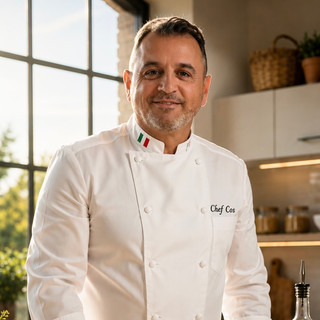
For Chef Costantino Cammarano, the strongest restaurant concepts are built on a clear identity. When a restaurant understands exactly who it is, decisions become more focused—from menu development and purchasing to design, service standards, staffing, and marketing.
Identity Before Expansion
Many restaurants try to become more competitive by adding more: more dishes, more categories, more promotions, and more ideas. Yet more does not always create greater value. An oversized menu can increase purchasing complexity, excess inventory, training demands, slower execution, inconsistency, and waste.
A focused menu communicates what the restaurant stands for. It gives the kitchen the opportunity to execute every item at a higher level and gives the guest a clearer reason to return. Strong identity creates trust because guests know what to expect—and why the experience matters.
Guests Pay for More Than Food
The value of a restaurant meal extends beyond food. It includes emotion. Guests remember how they were welcomed, whether the team moved with confidence, whether each course arrived at the right moment, and whether someone responded with care when a problem occurred. True hospitality makes guests feel seen without making service feel rehearsed or forced.
The most effective service is grounded in simple disciplines: know the menu, listen carefully, communicate honestly, anticipate needs, and respond quickly. Luxury is not always formality. Sometimes, luxury is competence.
The Two Worlds Must Become One
Every restaurant operates through two connected worlds: the dining room and the kitchen. Guests experience one restaurant, yet employees often feel the separation between front and back of house. When communication is weak, mistakes multiply. When both teams share information, standards, and mutual respect, the entire operation becomes stronger.
Daily briefings, menu tastings, clear allergy procedures, accurate menu knowledge, and direct communication between dining-room management and kitchen leadership create alignment. Guests experience one restaurant, but delivering that experience successfully requires an entire team. Hospitality is a team sport.
Consistency Creates Trust
One excellent dinner can create excitement; consistency creates loyalty. Guests return when they trust that the experience will be strong every time. Earning that trust requires documented recipes, clear standards, disciplined training, portion control, sanitation, purchasing discipline, and consistent management follow-through.
Consistency should never eliminate personality. It should create a dependable foundation that allows personality to shine without compromising quality or the guest experience.
Waste Is a Leadership Issue
Restaurant sustainability begins with operational intelligence. Accurate forecasting, cross-utilization of ingredients, disciplined preparation, appropriate portion sizes, proper storage, and a focused menu can reduce waste before it is discarded. Waste affects not only the environment, but also food cost and the financial health of the business.
Leaders must teach teams to recognize the full value of every ingredient. When food safety and quality allow, trimmings can become stocks, sauces, garnishes, staff meals, or other preparations. Respect for the product is not simply a kitchen habit; it is a standard established by leadership.
The Future Is Human
Technology will continue to transform reservations, ordering, inventory, scheduling, marketing, and data analysis. Yet hospitality will remain fundamentally human. Guests recognize genuine attention, just as employees recognize genuine leadership.
Technology should make restaurants more efficient so people have more time and capacity to deliver meaningful experiences. Its role is to support—not replace—the human connection that defines hospitality.
The restaurants that stand out will combine operational intelligence with emotional intelligence: clear concepts, disciplined systems, well-trained teams, and hospitality that feels personal.
“The future of restaurants is not bigger menus or bigger spaces. It is stronger identity. Guests do not pay only for food. They pay for trust, emotion, and experience.” - Chef COS


Comments