
Leadership in the Kitchen: Lessons from Four Decades in Hospitality
Updated: Aug 27

A professional kitchen reveals the quality of its leadership very quickly. During service, there is nowhere to hide from poor preparation, weak communication, unclear standards, or a team that does not trust its leader. The pressure of restaurant service transforms leadership from an abstract idea into a daily practice.
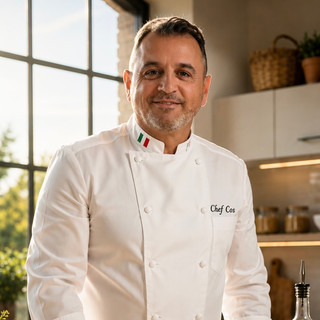
After more than four decades in hospitality, Chef Costantino Cammarano believes leadership is not measured by how loudly someone speaks, the fear they create, or the title they hold. It is measured by clarity, preparation, consistency, accountability, and the ability to help people perform at their best.
1. Set the Standard Before Service Begins
The best time to solve a service problem is before the dining room fills. Pre-service communication establishes the standard for the shift. The entire team should understand reservations, large parties, menu changes, sold-out items, allergy concerns, specials, VIP notes, staffing challenges, and the priorities of the shift.
A focused briefing or menu tasting can prevent hours of confusion. When kitchen and front-of-house teams receive the same accurate information, the restaurant operates as one unified team rather than two separate departments.
2. Calm Is an Operational Skill
Restaurants are unpredictable. Equipment fails, deliveries arrive late, a cook calls out, a table changes an order, or several tickets hit the kitchen at once. A leader who loses control adds another problem to the room. Calm is not passivity; it is the ability to think clearly, communicate precisely, and make sound decisions while everyone else is under pressure.
The team watches the chef closely. When the chef responds with control and precision, the team is more likely to do the same. Emotional discipline is not separate from technical discipline; it is part of it.
3. Train People - Do Not Only Merely Correct Them
Correction without training creates frustration. Effective leaders explain the standard, demonstrate it, observe the employee applying it, provide feedback, and then hold the person accountable. The purpose is not simply to identify mistakes; it is to build capability.
Every restaurant should develop people who are prepared to accept greater responsibility. Strong leaders are not threatened by talented employees. Strong leaders create them.
4. Respect Is Not Optional
Hospitality should not stop at the dining-room door. Employees deserve the same dignity and respect extended to guests. Kitchens are demanding environments, but high standards never require humiliation. People perform at their best when expectations are clear, feedback is constructive, and they know their work matters.
Respect also requires fairness. The same standards should apply to the strongest cook and the newest employee. Consistency builds trust, and trust is one of the most valuable forms of currency within a restaurant.
5. Protect the Business, Not Just the Plate
A chef is responsible for more than flavor. Purchasing, labor, portion control, waste, inventory, preparation levels, menu engineering, and food cost are all part of the role. Creativity without financial discipline can damage the very restaurant that makes creativity possible.
A focused menu is also a leadership tool. It reduces unnecessary complexity, simplifies training, strengthens consistency, and creates greater control over purchasing and waste. Operational clarity gives both the team and the business a stronger opportunity to succeed.
6. Lead by Example
People remember what leaders do more than what they say. When the chef arrives prepared, respects the product, maintains an organized kitchen, communicates professionally, and accepts responsibility, that example is more powerful than any motivational speech.
Leadership is revealed in small moments: tasting a sauce before service, stepping in when the team is overwhelmed, correcting privately whenever possible, recognizing a job well done, and never asking others to uphold a standard the leader is unwilling to follow.
" The strongest kitchen is not the loudest kitchen. It is the kitchen where people understand the standard, trust the leadership, communicate clearly, and know that excellence belongs to everyone—not only to the chef." -Chef Cos


Comments